Professor Woll
Office: Robeson 298, ex. 6671
E-mail: awoll@camden
Paolo Cherchi Usai, Burning Passions: An Introduction
to the Study of the Silent Cinema
Everson, American Silent Film
Kerr, The Silent Clowns
Musser, Before the Nickelodeon
Basinger, Silent Stars
Whitfield, Pickford, The Woman Who Made Hollywood
Keil, Early American Cinema in Transition
Marantz Cohen, Silent Film and the Triumph of the
American Myth
Abel, The Sounds of Early Cinema
Charles Musser, The Emergence of Cinema: The American Screen to 1907 (History of the American Cinema, Vol 1)
Richard Koszarski, The Transformation of Cinema 1907-1915 (History of the American Cinema, Vol 2)
Eileen Bowser, An Evening's Entertainment: The Age of the Silent Feature Picture 1915-1928 (History of the American Cinema, Vol 3)
Donald Crafton, Talkies: American Cinema's Transition to Sound,
1926-1931 (History of the American Cinema, 4)
Web sites of interest:
http://www.silentera.com/info/sitelinks.html
http://www.silentsmajority.com/
http://www.csse.monash.edu.au/~pringle/silent/preserve.html
http://www.eastman.org/1_geninfo/links.html
http://www.cinema-sites.com/Cinema_Sites_HIST.html
http://www.indiana.edu/~libsalc/film/www-resources.html
July 22 Introduction—The Early Films of the Lumiere Brothers
Readings: Cherchi Usai, Burning Passions, An Introduction to the Study of Silent Cinema
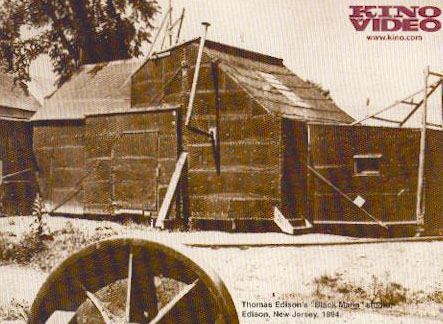
July 23 Thomas Edison, “Inventing Entertainment”
http://memory.loc.gov/ammem/edhtml/edhome.html
http://edison.rutgers.edu/mopix/mopix.htm
(click on catalogs for important information on Edison and silent
film). Why is Rutgers in the URL?
July 24 Edwin Porter
Readings: Musser, Before the Nickelodeon
Film: The Great Train Robbery
July 25 Student Presentations: "The Sounds of Early Cinema"
For Monday, read Keil, Early American Cinema in Transition.
Also prepare for your first written exercise!
_____________________
July 29 Early Griffith. First written assignment...
Consult, Everson, American Silent Film. Papers due on August 1
July 30 & 31 Writing and research days.
August 1 Late Griffith-- How he changed the
world of cinema. Excerpts from Birth of a Nation and Intolerance.
_________________________
Student Presentations begin this week --dates to be assigned.
August 5: Harold Lloyd and Silent Comedy
Film: Safety Last 1923
Kerr, The Silent Clowns
Harold Lloyd: Master Comedian by Jeffrey Vance, Suzanne Lloyd, Jack
Lemmon
Harold Lloyd: The Man on the Clock by Tom Dardis
August 6: Native Americans in Silent Cinema
Film: Vanishing American 1925
Hollywood's Indian: The Portrayal of the Native American in Film by
Peter C. Rollins (Editor), John E. O'Connor (Editor)
Celluloid Indians: Native Americans and Film by Jacquelyn Kilpatrick
The War, the West, and the Wilderness by Kevin Brownlow
(“The West”)
August 7: Mary Pickford and Early Hollywood
Film: Sparrows 1926
Whitfield, Pickford, The Woman Who Made Hollywood
Tino Balio, United Artists: The Company That Changed the Film Industry
August 8: Buster Keaton and Silent Comedy
Film: The General 1926
Kerr, The Silent Clowns
Buster Keaton: The Man Who Wouldnt Lie Down by Tom Dardis
The Theater and Cinema of Buster Keaton by Robert Knopf
Read: Marantz Cohen, Silent Film and the Triumph
of the American Myth for Monday
___________________
August 12 Guest lecture: Marantz Cohen.
August 13: Silent Film and the Social Context
[Behind the Mask of Innocence]
Film: The Crowd (1928)
Kevin Brownlow, Behind the Mask of Innocence
Steven Ross, Working Class Hollywood
August 14 The Coming of Sound
[note: third session summer school ends on a Wednesday]
Paper # 2 will be due by Tuesday, September 10. Please deliver
or mail it to my office.
_____________________
Class begins at 8:00 and ends at 10:30. Both lateness and absences will be penalized. Students arriving late will lose 5 points; students who miss a class will lose 10 points.
Work includes:
Class Participation: 100 points
Class Presentation Grade: 100 points
Paper #1: 100 points
Paper #2: 100 points
______________________
Written Assignment #1: Read Charlie
Keil's Early Cinema in Transition. Keil argues that 1907-1913
is an important era in the development of filmmaking. What
happens between these two dates? On Monday, we shall see several
early films by D. W. Griffith, some from the earlier period and some from
the later period. Your job will be to view these films and see whether
they support Keil's contentions. Prepare a five page typed essay
which discusses this issue. Use examples from the films to support
your argument. Your essay will be due on Wednesday, July 31, at the
beginning of class.
[You may also consult Everson's American Silent Film for information on Griffith]
You will view the following films:
1909:
Those Awful Hats
The Sealed Room
Corner in Wheat
The Redman's View
1912:
The Musketeers of Pig Alley
Death's Marathon
1913:
The Battle at Elderbush Gulch